Ledger vs Trezor 2026: Which Hardware Wallet Should You Buy?

By Timmy Grimberg · Founder · Last Updated:
DisclaimerCrypto is a high-risk asset class. This article is for informational purposes only and does not constitute financial or investment advice. You could lose some or all of your capital. TheTokener may earn a commission if you click through affiliate links on this page, at no extra cost to you. Our editorial opinions are independent. Read our full disclaimer.
Ledger Nano X
★★★★ 4/5Trezor Safe 3
★★★★ 4/5Ledger Nano X
Best for altcoin holders and mobile users. 5,500+ coins, Bluetooth, Ledger Live app. ~$149.
Pros
- ✓5,500+ supported coins including native Solana
- ✓Bluetooth + fully-featured mobile app
- ✓Ledger Live: staking, swaps, NFT management
- ✓EAL5+ Secure Element chip
Cons
- ✗Closed-source firmware
- ✗Ledger Recover controversy (2023)
- ✗More expensive at ~$149
- ✗2020 customer data breach (class action settled)
Trezor Safe 3
Best for open-source purists and Bitcoin/ETH holders. 100% open-source, EAL6+ chip. ~$79.
Pros
- ✓100% open-source firmware and hardware
- ✓EAL6+ Secure Element chip
- ✓No seed phrase cloud backup option (no Recover risk)
- ✓Strong value at ~$79
Cons
- ✗No Bluetooth or mobile app
- ✗No native Solana support
- ✗Fewer altcoins natively supported
- ✗Trezor Suite is desktop-first
Quick Verdict
Buy Ledger if you hold a wide range of altcoins (especially Solana, Polkadot, or anything Ledger Live supports natively), want Bluetooth and a mobile app, or plan to stake directly from your wallet.
Buy Trezor if open-source firmware is non-negotiable, you hold mainly Bitcoin or Ethereum, or the Ledger Recover situation made you uncomfortable enough to rule them out.
Consider Tangem if you want the simplest possible self-custody with no seed phrase to manage — though that simplicity comes with its own tradeoffs.
Ledger vs Trezor: Full Comparison
The two wallets differ most on three fronts: security philosophy (open-source vs closed Secure Element), coin support (Ledger supports Solana natively, Trezor does not), and price (Trezor Safe 3 is $79 vs Nano X at $149). Here is the full breakdown:
Feature | Ledger Nano X | Trezor Safe 3 |
|---|---|---|
Security chip | CC EAL5+ Secure Element | EAL6+ Secure Element |
Firmware | Closed-source | 100% open-source |
Supported coins | 5,500+ | ~9,000 tokens |
Native Solana | Yes | No |
Bluetooth | Yes | No |
Mobile app | Ledger Live (full) | Limited |
In-wallet staking | Yes (ETH, SOL, ADA, more) | Limited |
Price | ~$149 | ~$79 |
Open-source HW | No | Yes |

Security: How Each Wallet Protects Your Keys
Both wallets use a dedicated Secure Element chip to store private keys, meaning your keys never touch your computer or phone. That said, the security philosophies differ significantly.
Ledger
The Nano X uses a CC EAL5+ Secure Element chip and a separate STM32 microcontroller. The firmware is closed-source, which Ledger justifies by pointing to the chip manufacturer requirements. The trade-off: you trust Ledger not to push malicious firmware.
The Ledger Recover service (announced in 2023) caused a significant backlash because it demonstrated that the seed phrase could theoretically be extracted and transmitted by firmware. Ledger says Recover is opt-in and encrypted, but the controversy permanently altered trust for some users.
Trezor
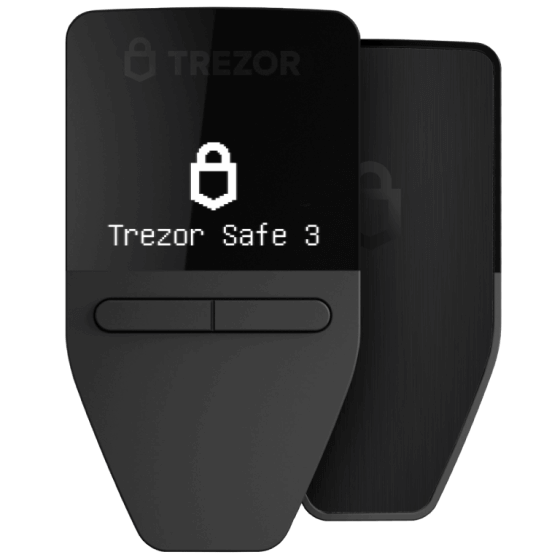
The Trezor Safe 3 uses an EAL6+ Secure Element chip and runs 100% open-source firmware on the microcontroller. Anyone can audit the code. There is no closed-source pathway, and Trezor has never introduced a seed-escrow feature.
The practical risk with Trezor is physical access: if someone gets your device and knows your PIN, they have 16 guesses before the device wipes. The open-source firmware is verified by the community continuously.
Coin Support
Ledger supports over 5,500 coins natively through Ledger Live, including Solana, Polkadot, Cardano, and most ERC-20 tokens. Trezor supports approximately 9,000 tokens but fewer native blockchains. Solana is the most notable gap.
If you hold Solana or plan to, Ledger is the only option between the two. If you stick to Bitcoin, Ethereum, and ERC-20 tokens, either wallet covers you completely.
Software: Ledger Live vs Trezor Suite
Ledger Live
Ledger Live is a full portfolio management app available on desktop and mobile. It supports staking (ETH, SOL, ADA), swaps, NFT management, and direct crypto purchases through third-party providers. For users who want to do more than just store coins, it is the more capable companion app.
Trezor Suite
Trezor Suite is desktop-first. It covers buying, selling, and swapping through integrated providers, and supports coin control for Bitcoin power users. There is a browser version, but no dedicated mobile app. For most users, this is not a deal-breaker, but if you want to check your wallet balance from your phone, Ledger has the advantage.
Price
The Trezor Safe 3 costs around $79. The Ledger Nano X costs around $149. If you hold Bitcoin and Ethereum only and do not need Bluetooth or a mobile app, the Safe 3 gives you strong security at nearly half the price.
The Ledger Nano S Plus is a cheaper option at around $79, but it lacks Bluetooth and has less storage for apps.
Tangem: The Third Option Worth Knowing
The key difference: Tangem uses a card-based form factor with no seed phrase. Your private key is generated on-chip and never displayed. Recovery works through a set of backup cards instead.
That is the appeal: you cannot lose a seed phrase you do not have. It also means you are trusting Tangem's proprietary recovery architecture rather than the universal BIP-39 seed phrase standard that works with any wallet.
Choose Tangem if you are onboarding someone who is not comfortable managing a seed phrase, or you genuinely want the simplest possible self-custody experience. Do not choose Tangem if open-source firmware and seed phrase portability matter to you.
Do Ledger or Trezor Report to the IRS?
No. Neither company can.
Hardware wallets are non-custodial. Ledger and Trezor have no access to your wallet balances, transaction history, or private keys. They are devices that store keys locally on hardware you own. There is nothing for them to report, and no mechanism by which they could.
The IRS gets crypto transaction data from centralized exchanges (Coinbase, Kraken, Binance) which are required to file 1099s for US customers. Moving crypto from an exchange to a hardware wallet does not create a taxable event, but the exchange does know you withdrew funds.
If you need to track your on-chain transaction history for tax purposes, you will need crypto tax software like Koinly or CoinLedger that can read wallet addresses and reconstruct your transaction history.
FAQ
Can crypto be stolen from a Ledger?
Not through the device itself under normal use. Your private keys never leave the Secure Element chip. The realistic attack vectors are phishing (someone tricks you into entering your seed phrase on a fake site), a compromised computer signing a malicious transaction you approve, or physical theft combined with a weak PIN. The device is secure; the human layer is where most losses happen.
Is Ledger shutting down?
No. Ledger the company is operational. The Ledger Nano S (the original model) reached end-of-support in 2024, meaning no new firmware updates, but it still works. If you have an old Nano S, it is worth upgrading to a Nano X or Ledger Stax, not because the device is broken, but because continued firmware updates matter for security.
What is the best cold wallet overall?
For most users: Trezor Safe 3 if you want open-source at $79, Ledger Nano X if you need altcoin breadth and Bluetooth at $149.
Do I need to update my hardware wallet firmware?
Yes, regularly. Firmware updates patch security vulnerabilities. Both Ledger Live and Trezor Suite prompt you when updates are available. Do not skip them.
Our Verdict
Who Should Buy Which
Choose Ledger if: you hold Solana, Polkadot, or altcoins Trezor handles less cleanly; you want to stake via Ledger Live; you prefer Bluetooth and a mobile app; you're comfortable with Ledger's explanation of the Recover situation.
Choose Trezor if: open-source firmware is non-negotiable; your portfolio is Bitcoin, Ethereum, and ERC-20 tokens; you want to spend $79 instead of $149; the Ledger Recover announcement eroded your trust.
Consider Tangem if: you're onboarding someone new to crypto who finds seed phrases intimidating, or you want the simplest cold storage setup possible.
* This page contains affiliate links. We may earn a commission if you click through and make a purchase. This does not affect our editorial independence. See our disclosure policy.

Timmy Grimberg
Founder
Timmy Grimberg is the founder of TheTokener and a crypto SEO specialist with years of experience in Web3 content strategy. He has been active in crypto since 2017, specialising in hardware wallet security, exchange analysis, DeFi, and helping readers navigate self-custody without the jargon.
Read Timmy Grimberg Articles ›